
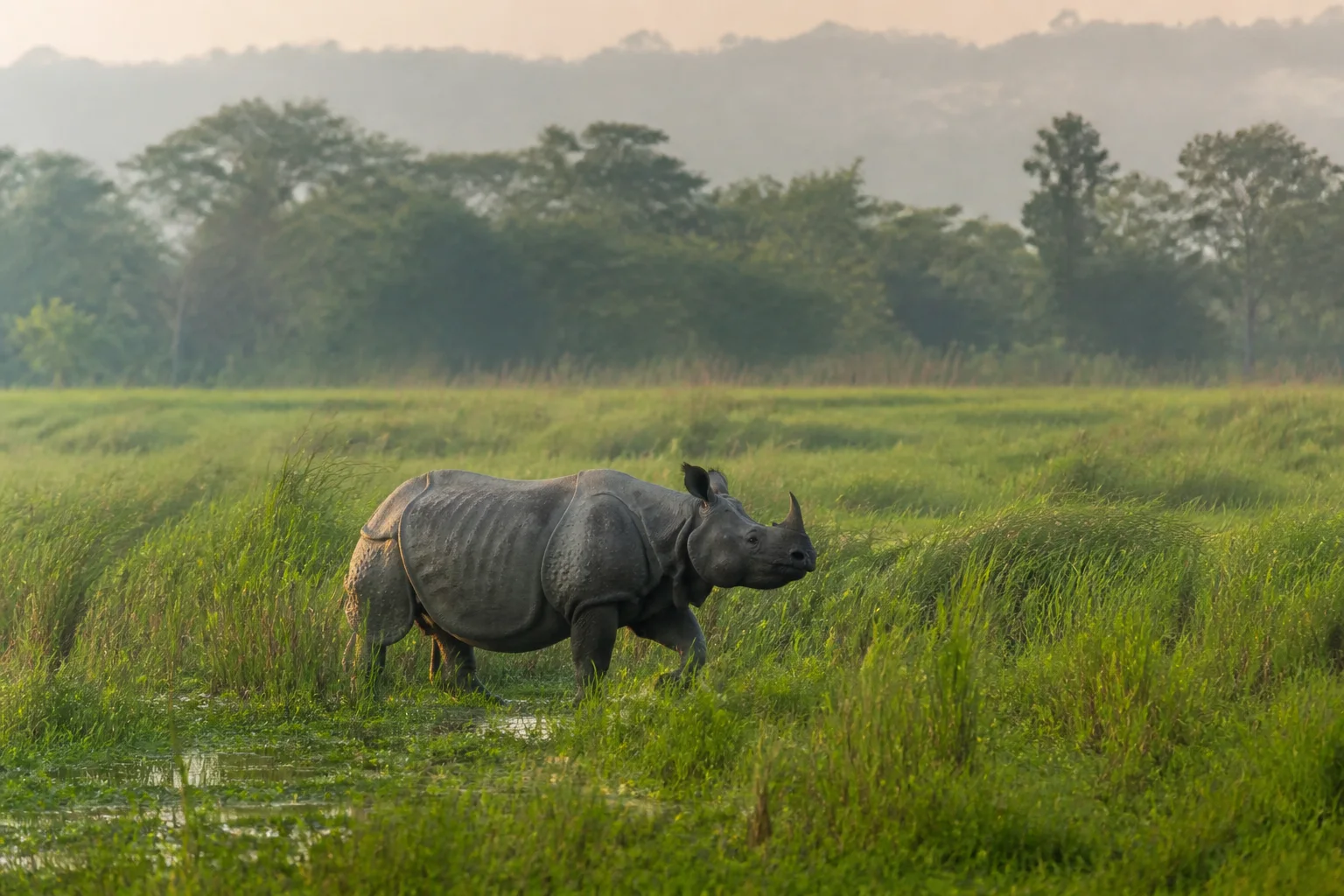
Beyond the checklist
Wildlife journeys often begin with a wish list, and there is nothing wrong with hoping to see a tiger, rhinoceros or elephant. The trouble begins when one animal becomes the only measure of a good day. Nature does not work to an itinerary, and a forest visit becomes narrow when everything else is treated as waiting.
A naturalist may notice an alarm call, a broken branch or the direction of the wind. These are not delays before the main event. They are the event. Learning to follow such signs turns a drive into a story with tension, uncertainty and its own logic.
Every landscape speaks differently
Kaziranga’s tall grass and wetlands ask you to scan openings and water edges. In the sal forests of central India, sound often travels farther than sight. Around Odisha’s mangroves, the tide changes which channels are passable and where birds gather to feed.
The season matters too. Dry months draw animals towards water, but dust and heat shape the day. Cooler mornings bring activity, while an afternoon can be almost completely still. After rain, tracks disappear and the forest smells newly alive. No two outings repeat themselves.
The forest rewards patience in small instalments: a footprint, a warning call, a sudden movement in long grass.
The people who read the land
Local guides, drivers and trackers build knowledge over years. They remember where a stream held water last week, recognise an individual animal’s behaviour and understand when silence itself is a clue. Their skill is practical, patient and often understated.
The best wildlife travel makes room for this expertise. Ask questions, but also allow periods of quiet. A guide concentrating on the road and the canopy may not explain every minute. Often they are collecting signs before sharing what they think is happening.
A sighting is a meeting, not a possession
When a large animal finally appears, excitement can quickly fill a vehicle. This is the moment to stay composed. Keep voices low, follow the naturalist’s directions and let the animal choose the distance. The strongest encounters are those in which wildlife continues behaving naturally.
Some drives end without the animal you most hoped to see. They may still hold a hornbill crossing the track, langurs warming in the sun and a hundred details you could not have predicted. A forest is not a stage that failed to produce its star. It is a living system, and we are fortunate to enter it for a few hours.