
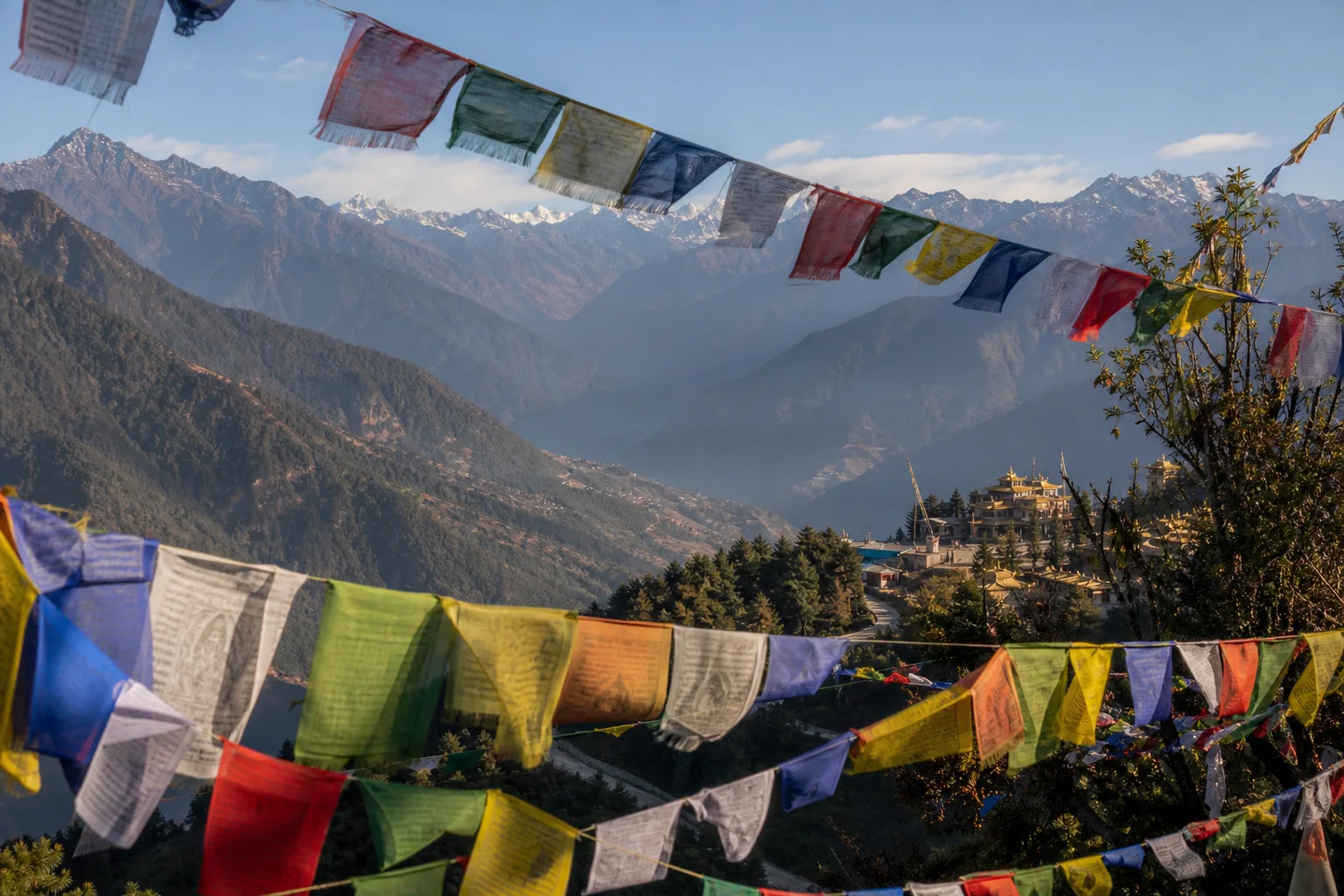
The road sets the rhythm
Journeys through Sikkim and Bhutan are built around terrain. Roads are often narrow, weather can change quickly and construction is part of mountain life. A landslip or a convoy of trucks may add time without warning. Planning well means treating estimates as guidance, not promises.
This can be frustrating if every day is crowded with fixed appointments. With a more generous plan, the same uncertainty becomes part of the experience. A pause by the roadside reveals terraces dropping into mist. A tea stop offers time to stretch and hear news of the road ahead.
Altitude changes more than the view
As the road climbs, vegetation shifts. Broad-leaved forest gives way to conifers and rhododendrons. The air cools. Bodies may need time to adjust, even at moderate heights, and a route that rises gradually is usually more comfortable than one that chases altitude too quickly.
Weather also moves vertically. A valley can be warm while a high pass is wrapped in cloud or snow. Layers, water and patience are more useful than a rigid expectation of sunshine. Mountain views are gifts, not scheduled performances.
The map measures kilometres. The road measures weather, elevation, patience and the number of times you stop to look back.
Monasteries as pauses
Many Himalayan routes are punctuated by monasteries. They are often reached by another climb, on foot or by road, and the arrival naturally slows the day. Prayer flags move in the wind, butter lamps burn in dim halls and daily work continues around visitors.
It helps not to treat each monastery as a box to tick. One careful visit can be more affecting than four hurried ones. Ask about the school of Buddhism, notice the painted stories and leave time to sit in the courtyard without needing to fill the silence.
Planning for a humane day
A humane mountain itinerary keeps consecutive long drives to a minimum. It chooses comfortable bases, builds in rest and avoids making every early morning compulsory. It also accepts that a route may need to change for safety or weather.
The Himalaya teaches proportion. A short distance can be immense. A delayed arrival can still be a good day. Once the road is allowed to be part of the journey, rather than an obstacle between highlights, the mountains become more legible and travel feels less like a race against them.