
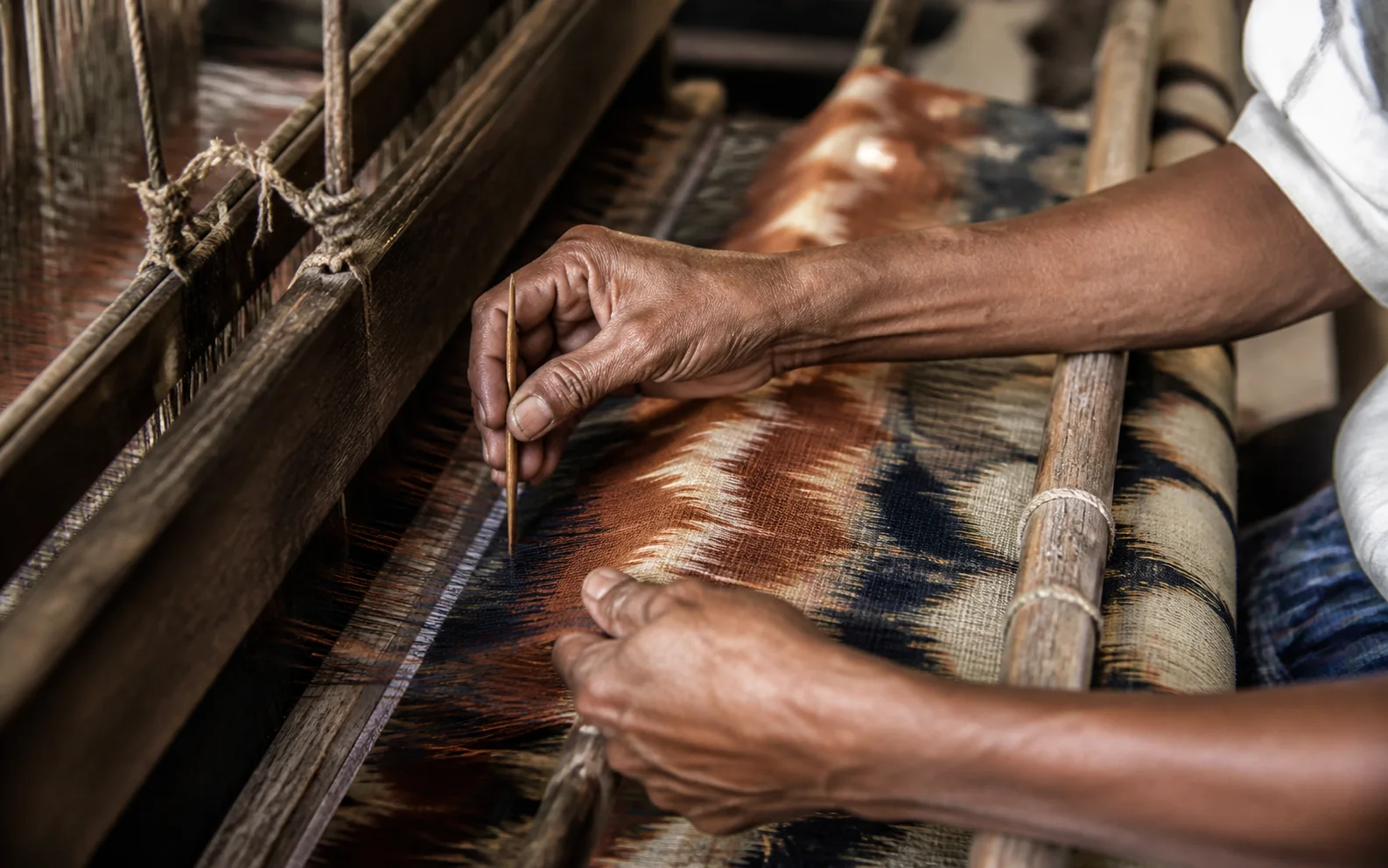
The work behind the surface
Odisha has many distinct textile traditions. Sambalpuri ikat is widely recognised, but even that name contains regional patterns, techniques and family practices. Before weaving begins, threads are carefully bound and dyed so that the design emerges on the loom. Precision is planned long before the cloth takes shape.
Other traditions include Kotpad textiles coloured with natural dyes, Bomkai patterns and fine work from Nuapatna and Maniabandha. Labels can help us begin, but they should not flatten the differences between villages, workshops and individual makers.
A meeting, not a demonstration
When travellers visit a weaving home or cooperative, it is tempting to expect a neat performance. Real work is less predictable. A loom may be idle because yarn has not arrived. A weaver may be finishing another task. The most valuable visit often begins with conversation rather than a demonstration arranged for the camera.
Ask how long a piece takes, who designed the pattern and where materials come from. Ask what younger members of the family want to do. These questions reveal craft as a present-day livelihood, shaped by education, migration, demand and the cost of raw materials.
When we meet the maker, an object stops being anonymous. We begin to see the decisions held inside it.
The complicated question of price
Handmade work competes with machine production and imitation. To an unfamiliar eye, two pieces can look similar while requiring vastly different time and skill. Very low prices may be attractive, but they can also make it harder for labour-intensive traditions to remain viable.
Buying directly from a maker, recognised cooperative or trusted source can create a clearer connection between payment and work. It is reasonable to ask about materials and provenance. Bargaining may be expected in some settings, though it is worth considering what a small saving means in relation to days or weeks of labour.
What we really take home
Not every meaningful craft encounter needs to end in a purchase. Listening with attention, sharing photographs only with permission and telling others accurately about the tradition also matter. If you do buy, choose something you will use, care for and remember in context.
The object then carries more than a pattern. It recalls the sound of the loom, the light in the room and the person who explained why one border is woven differently from another. That memory is not a marketing story added afterwards. It is part of the value created by meeting craft where it lives.
Travel can reduce handmade work to a souvenir, or it can restore the human scale behind it. The difference lies in how long we look, what we ask and whether we allow the maker to be more important than the thing we might carry away.