
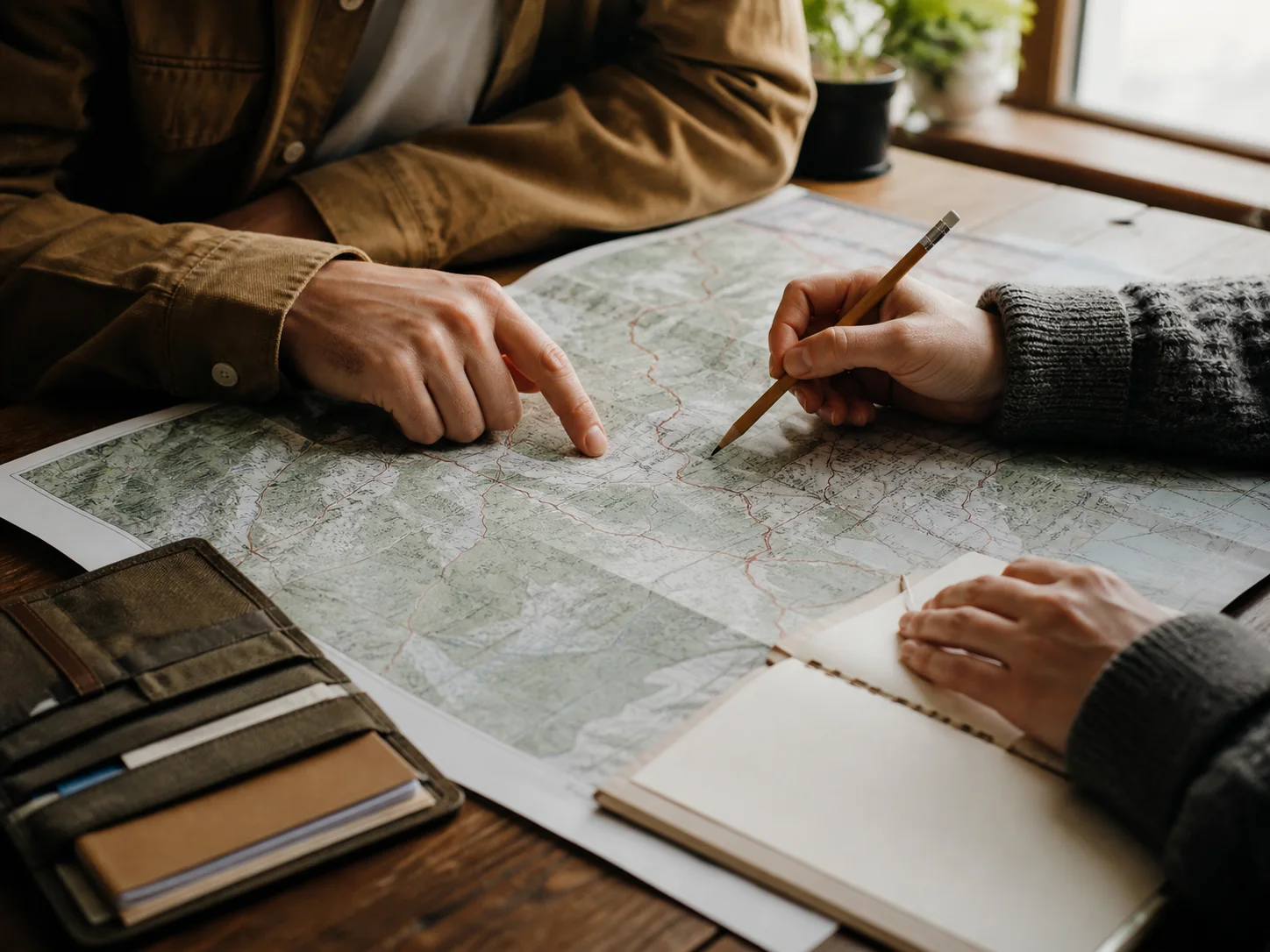
Distance is not the same as time
A route may look modest on a map and still hold a full day. Roads bend around hills, pause at railway crossings and pass through markets that become crowded without warning. In the Himalaya, fifty kilometres can mean several hours. In rural Odisha, a village stop intended for twenty minutes can become a long conversation over tea.
We plan with this in mind. Travel time is not dead time between attractions. It is part of the country revealing itself. From the window you see the land change, notice what grows in the fields and understand how one settlement relates to the next.
The unscheduled hour
Some of the strongest travel memories arrive without an appointment. A roadside fruit seller cuts open a pomelo. A monastery courtyard fills with the sound of young monks finishing lessons. Rain delays a walk, so the afternoon is spent talking with the owner of a small guesthouse.
These moments need space. An itinerary packed to the edge cannot accept them. A well-paced journey has a little give in it, enough to stay when something becomes interesting and enough to rest before tiredness turns curiosity into obligation.
A slower route does not contain less. It often allows a place to become more specific, more surprising and more memorable.
Fewer bases, deeper days
Changing hotels every night can create the impression of progress, but it comes with a cost. Bags are always half packed, mornings are ruled by check-out times and each place is encountered only at its most obvious hour.
Two or three nights in one base changes the feeling completely. You learn the road back. A cafe owner recognises you. There is time to visit the market in the morning and return to the same neighbourhood after dusk. Familiarity, even brief familiarity, makes a destination feel less like a backdrop.
Slow does not mean passive
Travelling slowly can include long walks, wildlife drives, cooking sessions, temple visits and ambitious days. The difference is rhythm. Activity is followed by recovery. A demanding morning does not automatically lead to an equally demanding evening.
The right pace is personal. Some travellers want hours to sketch or photograph. Others want to keep moving, but without rushing. Families need flexibility that a fixed group schedule rarely provides. The most useful question is not, ‘How much can we fit in?’ It is, ‘What do we want to remember clearly?’
When a route is built around that answer, the journey stops being a collection of completed stops. It becomes a sequence of lived days, each with its own shape and a little room for the road to speak back.